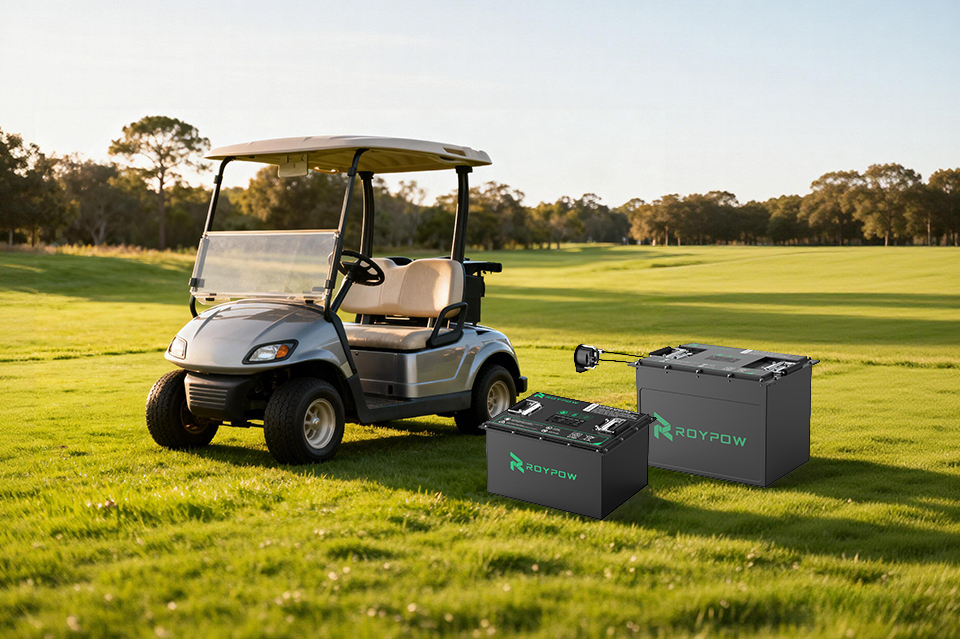
Quick Answer: Which Golf Cart Battery Is Better?

For most golf cart owners, fleet operators, resorts, campuses, and industrial users in the global world market, LiFePO4 lithium golf cart batteries are the better long-term choice than traditional lead-acid batteries. Lead-acid batteries still have one clear advantage: a lower initial purchase price. However, lithium iron phosphate batteries typically deliver a longer cycle life, faster charging, lighter weight, higher usable capacity, lower maintenance, and a lower total cost of ownership over several years.
If you use a golf cart only occasionally and want the lowest upfront cost, a flooded lead-acid pack may be acceptable. If you use the cart frequently, manage a fleet, operate in hilly terrain, serve a resort, run rental carts, or need reliable daily performance, LiFePO4 is usually the stronger investment. This is especially true in high-traffic markets such as Florida, California, Dubai, Singapore, Sydney, Cape Town, São Paulo, Rotterdam, Hamburg, and coastal resort regions where carts work long hours and downtime is expensive.
The practical comparison is simple: a typical lead-acid golf cart battery pack may last around 300 to 700 cycles depending on care, while a quality LiFePO4 pack can reach several thousand cycles under suitable operating conditions. Lead-acid batteries often require watering, equalization, terminal cleaning, ventilation, and careful storage. LiFePO4 batteries are designed for zero watering and are protected by an integrated battery management system, commonly called a BMS.
For buyers comparing replacement options, modern lithium drop-in systems are available for 36V, 48V, and 72V carts. ROYPOW, a global lithium battery technology company, focuses on lithium-ion replacements for lead-acid batteries and offers application-specific solutions for motive power and energy storage. For general golf cart applications, buyers can explore ROYPOW Golf Cart Batteries designed for stable performance, extended runtime, and simplified maintenance.
| Comparison Point | Lead-Acid Battery | LiFePO4 Lithium Battery | Buyer Takeaway |
|---|---|---|---|
| Upfront cost | Lower | Higher | Lead-acid is cheaper at purchase |
| Cycle life | Often hundreds of cycles | Often thousands of cycles | Lithium usually wins over time |
| Charging speed | Slower | Faster | Lithium improves daily availability |
| Maintenance | Watering and cleaning needed | No watering | Lithium reduces labor |
| Weight | Heavy | Much lighter | Lithium improves acceleration and range |
| Usable capacity | Limited by depth of discharge | Higher practical usable energy | Lithium provides more consistent runtime |
| Safety management | Requires acid and gas precautions | BMS protected | Both need correct use, but risks differ |
This table shows why the best battery is not determined by sticker price alone. In global world markets where carts are used for golf courses, resorts, communities, warehouses, ports, airports, factories, and tourism operations, downtime, service labor, and replacement frequency often cost more than the battery itself.
Battery Chemistry Explained: How Lead-Acid and LiFePO4 Work

Lead-acid and LiFePO4 batteries both store electrical energy chemically, but they do so in very different ways. Understanding the chemistry helps explain why they perform differently in golf carts, utility vehicles, and low-speed electric vehicles.
A lead-acid battery uses lead dioxide on the positive plate, sponge lead on the negative plate, and sulfuric acid as the electrolyte. During discharge, chemical reactions convert active materials into lead sulfate while releasing electrical energy. During charging, the process is reversed. This chemistry is well established, widely available, and relatively inexpensive, which explains its long history in golf carts.
However, lead-acid chemistry is sensitive to deep discharge, partial charging, sulfation, heat, vibration, and poor maintenance. If a flooded lead-acid battery is repeatedly discharged too deeply or left undercharged, lead sulfate crystals can harden on the plates. This reduces capacity and shortens service life. Water loss from charging also means flooded lead-acid batteries require regular inspection and topping up with distilled water.
LiFePO4 stands for lithium iron phosphate. This chemistry uses lithium ions moving between cathode and anode materials during charge and discharge. Compared with some other lithium chemistries, LiFePO4 is known for thermal stability, long cycle life, and suitability for motive power applications. In a golf cart battery pack, LiFePO4 cells are integrated with a BMS that monitors voltage, current, temperature, balancing, and protection functions.
The BMS is one of the most important differences between modern lithium packs and traditional lead-acid batteries. It helps prevent overcharge, over-discharge, overcurrent, short circuit, and abnormal temperature conditions. In well-engineered systems, the BMS works with the charger and vehicle system to maintain safe operation and consistent performance.
Lead-acid voltage drops more noticeably as the battery discharges. That means the golf cart may feel strong at the beginning of the day and weaker toward the end. LiFePO4 batteries maintain a flatter discharge voltage curve, so the cart can deliver more consistent acceleration and hill-climbing until the pack is nearly depleted. This matters for hilly golf courses in Scotland, resort roads in the Caribbean, mountain communities in South Africa, and large villa districts in Southeast Asia.
Product type also matters. Flooded lead-acid batteries are the most maintenance-intensive. AGM and gel lead-acid batteries reduce watering needs but still carry the weight and cycle-life limitations of lead-acid chemistry. LiFePO4 packs may be sold as single integrated packs or modular replacements depending on the vehicle voltage and space available.
| Battery Type | Main Chemistry | Maintenance Level | Typical Strength | Typical Limitation |
|---|---|---|---|---|
| Flooded lead-acid | Lead plates and liquid sulfuric acid | High | Low initial cost | Watering, acid risk, shorter life |
| AGM lead-acid | Absorbed glass mat lead-acid | Medium to low | Sealed design | Heavy and limited cycle life |
| Gel lead-acid | Gel electrolyte lead-acid | Low | Reduced spill risk | Charging sensitivity |
| LiFePO4 lithium | Lithium iron phosphate | Very low | Long life and light weight | Higher upfront cost |
| Integrated lithium pack | LiFePO4 with BMS | Very low | System-level protection | Requires compatible charger |
| Modular lithium setup | Multiple LiFePO4 modules | Very low | Flexible installation | Requires correct configuration |
The chemistry table highlights why battery selection should be based on usage pattern, charging access, climate, service resources, and vehicle requirements. A private cart in a quiet residential community has different needs from a 100-cart fleet at a resort near Cancún, Phuket, Bali, or the Algarve.
Cycle Life and Longevity: From 500 Cycles to 5,000 Cycles

Cycle life is one of the biggest reasons buyers compare lead-acid vs lithium golf cart battery systems. A cycle means one discharge and recharge event, although partial cycles may count proportionally. The cycle rating of a battery depends on depth of discharge, temperature, charging method, current load, cell quality, and maintenance.
Many lead-acid golf cart batteries are rated for a few hundred cycles under controlled conditions. In real-world use, poor watering, high heat, deep discharge, sulfation, and storage neglect can reduce that number. Fleet managers in hot regions such as Arizona, Dubai, Riyadh, Queensland, and parts of India often see faster degradation when batteries are exposed to heat and heavy daily use.
LiFePO4 batteries are designed for far longer cycle life. Depending on quality, design, and usage, a lithium iron phosphate golf cart battery can deliver several thousand cycles. For a daily-use cart, that difference can translate into years of additional service. For a fleet operator, it can mean fewer replacements, less inventory, less technician time, and better vehicle availability.
Depth of discharge is crucial. Lead-acid batteries do not like repeated deep discharge. Many users try to avoid discharging below about 50 percent to preserve life. LiFePO4 batteries tolerate deeper discharge better, which means more usable capacity from the same nominal energy rating. This is why a lithium battery pack with similar rated capacity can often provide longer practical range than a heavier lead-acid pack.
Longevity also depends on matching the battery to the vehicle. A cart used for flat golf course paths may have easier duty than one used for shuttle service at a hilltop resort. A 36V fleet in a private club may need a different solution from a 48V utility cart hauling tools or a 72V high-performance vehicle carrying passengers around a large estate.
For owners of older 36V carts, modern 36V Golf Cart Batteries provide a path to upgrade without moving to a completely new platform. For many mainstream carts, 48V Golf Cart Batteries are a common choice because 48V systems are widely used in golf, community transport, utility, and resort applications. Higher-power applications may evaluate 72V Golf Cart Batteries where vehicle design and controller compatibility support that voltage.
Cycle life should not be viewed only as a lab number. The better question is: how many useful years will the battery deliver in your working conditions? A golf course in Dublin with moderate temperatures, a resort in the Maldives with salty air, and a desert community near Las Vegas all place different stresses on battery systems. Lithium reduces many maintenance variables, but correct installation, charging, and storage still matter.
Charging Time and Energy Efficiency Comparison
Charging speed directly affects how many hours a cart can work each day. Lead-acid batteries generally require longer charging times and may need a full charge cycle to avoid sulfation. They can also require an absorption stage and sometimes equalization charging depending on the battery type and manufacturer instructions. In fleet operations, this can limit vehicle availability.
LiFePO4 batteries can usually accept charge more efficiently and often charge faster when paired with the correct charger. Faster charging is useful for golf courses with morning and afternoon tee times, hotels using carts for luggage transport, security teams patrolling large campuses, and industrial facilities where vehicles operate across multiple shifts.
Energy efficiency is another important factor. Lead-acid batteries lose more energy as heat during charging and discharging. LiFePO4 batteries typically offer higher round-trip efficiency, meaning more of the electricity from the wall becomes usable energy at the wheels. Over a 10-year period, especially with dozens or hundreds of carts, improved efficiency can reduce electricity consumption and support sustainability targets.
Charging infrastructure should be planned carefully. Lithium batteries should be charged with a charger designed for the battery chemistry and voltage. Using an incorrect charger may reduce performance or create safety issues. For lithium upgrades, a compatible Golf Cart Battery Charger is a key part of the system, not an accessory to be selected casually.
Many global world markets are also moving toward smarter energy management. Resorts may combine solar panels, energy storage, and lithium vehicle charging. Golf clubs in California, Spain, Australia, and Japan increasingly evaluate carbon footprint, grid demand, and nighttime charging plans. Ports such as Rotterdam, Los Angeles, Singapore, and Jebel Ali are also pushing electrification strategies for support vehicles and low-speed equipment. The same charging principles apply: efficient batteries and correct charging systems help reduce energy waste.
| Charging Factor | Lead-Acid | LiFePO4 | Operational Impact |
|---|---|---|---|
| Typical charge time | Longer | Shorter with correct charger | Lithium improves cart availability |
| Partial charging | Can accelerate sulfation if mismanaged | Generally more tolerant | Lithium suits opportunity charging |
| Energy efficiency | Lower | Higher | Lithium can reduce electricity waste |
| Heat generation | Higher during charging | Usually lower | Lithium supports cooler operation |
| Charger matching | Important | Essential | Use chemistry-specific chargers |
| Fleet scheduling | More restrictive | More flexible | Lithium helps multi-shift use |
| Storage charging | Requires careful full-charge management | Requires manufacturer-guided storage SOC | Both need correct storage practices |
The charging comparison shows why lithium is attractive in commercial settings. The value is not only faster charging, but also better scheduling, reduced labor, and fewer emergency battery swaps during peak operating hours.
Weight Reduction and Performance Impact
Weight is one of the most noticeable differences when converting from lead-acid to LiFePO4. Traditional lead-acid packs are heavy because lead is dense. A full set of lead-acid golf cart batteries can add significant mass to the vehicle. LiFePO4 packs are much lighter for comparable usable energy, often reducing total vehicle weight substantially.
Lower weight can improve acceleration, hill climbing, braking feel, tire wear, and range. It may also reduce stress on suspension components and steering systems. On soft turf, lower weight can reduce ground pressure and help protect fairways, especially after rain. Golf course superintendents in regions such as Ireland, the United Kingdom, New Zealand, and the Pacific Northwest may value reduced turf impact.
For resorts and hospitality properties, performance consistency matters. A cart carrying guests and luggage at a large resort in Bali, Mauritius, the UAE, or the Caribbean needs predictable power throughout the day. Lead-acid voltage sag can make carts feel weaker as charge declines. LiFePO4 voltage stability supports a more consistent driving experience.
For industrial and utility applications, lighter batteries can increase payload capacity. If the vehicle has a gross weight limit, reducing battery weight may allow more tools, supplies, or passengers within safe limits. This matters in airports, warehouses, university campuses, factories, and municipal operations.
However, battery weight also affects vehicle balance. A properly designed lithium replacement should fit securely, distribute weight appropriately, and connect safely with the cart’s electrical system. Installation should follow manufacturer guidance, including cable sizing, mounting, charger compatibility, and controller requirements.
Performance upgrades should be realistic. A lithium battery can improve efficiency and power delivery, but it does not override the mechanical limits of the vehicle. Brakes, tires, suspension, motor, controller, and local low-speed vehicle regulations must be considered. In markets such as the United States, European Union, Australia, Japan, and South Korea, cart usage on public or community roads may be subject to specific speed, lighting, insurance, and safety rules.
Maintenance Requirements: Watering vs Zero Maintenance
Maintenance is where many golf cart owners become frustrated with lead-acid batteries. Flooded lead-acid batteries require periodic watering with distilled water. If water levels drop too low, plates can be exposed and damaged. If overfilled, acid can spill during charging. Terminals may corrode, cables may loosen, and battery trays may suffer acid damage over time.
Lead-acid batteries also need correct charging habits. Leaving them discharged can cause sulfation. Charging them in poorly ventilated areas can allow hydrogen gas accumulation. Acid handling requires protective equipment and training. In small private use, this may be inconvenient. In large fleets, it becomes a recurring labor cost and safety-management responsibility.
LiFePO4 golf cart batteries are commonly described as zero maintenance because they do not require watering, equalization, or acid cleaning. The BMS monitors internal conditions and protects the pack within design limits. Owners still need to keep cables secure, use the correct charger, follow storage instructions, and inspect the vehicle, but routine battery service is greatly reduced.
For golf courses and hospitality fleets, this difference can be significant. Instead of assigning staff to inspect water levels across dozens of carts, maintenance teams can focus on tires, brakes, steering, cleaning, and vehicle readiness. For operations in labor-constrained markets such as North America, Western Europe, Japan, Singapore, and Australia, lower maintenance can produce real economic value.
Zero watering also supports cleaner battery rooms. Acid spills can damage floors, shelves, clothing, tools, and vehicle frames. Corrosion can create hidden resistance in cables and reduce performance. Lithium systems eliminate acid leakage concerns because they do not use liquid sulfuric acid. This is helpful in premium environments such as private clubs, luxury resorts, cruise terminals, gated communities, and indoor facilities.
That said, zero maintenance does not mean zero responsibility. A lithium battery must not be physically abused, submerged, modified, short-circuited, or charged with an unsuitable charger. Owners should check manufacturer documentation for temperature limits, storage state of charge, warranty conditions, and installation requirements.
10-Year Total Cost of Ownership Analysis
Total cost of ownership, or TCO, is the most useful way to compare lead-acid and LiFePO4 golf cart batteries. TCO includes the purchase price, replacement frequency, charging electricity, maintenance labor, downtime, disposal, installation, accessories, and performance value. A lead-acid pack may look cheaper on day one, but it can become more expensive over a decade if it needs multiple replacements and frequent service.
Consider a golf cart used regularly in a club, resort, or community. A lead-acid pack might require replacement several times over 10 years depending on use and care. Each replacement includes battery cost, labor, downtime, recycling logistics, and possible cable or tray repairs. A quality LiFePO4 pack may last far longer, reducing the number of replacement events.
Electricity cost also matters. Higher energy efficiency can reduce charging expense. This difference may be modest for one private cart, but meaningful for a fleet of 50, 100, or 300 vehicles. In countries with high electricity prices, such as parts of Europe, Japan, Australia, and island nations, efficiency gains become more valuable.
Maintenance labor is often underestimated. Watering batteries, cleaning terminals, checking acid levels, recording service, and managing battery failures take time. If a facility uses paid technicians, the labor cost can exceed expectations. If staff are untrained, improper maintenance can shorten battery life and create safety risks.
Downtime can be the largest hidden cost. A golf cart that fails during a tournament, a hotel transfer, a campus event, or a factory shift disrupts operations. Lead-acid battery performance can degrade gradually, making range unpredictable. Lithium systems provide more consistent performance and better visibility when paired with intelligent monitoring features.
| 10-Year Cost Area | Lead-Acid Impact | LiFePO4 Impact | Why It Matters |
|---|---|---|---|
| Initial purchase | Lower | Higher | Lead-acid reduces upfront spending |
| Replacement count | Often multiple replacements | Often fewer replacements | Lithium can lower long-term cost |
| Maintenance labor | Regular watering and cleaning | Minimal routine battery maintenance | Labor savings add up |
| Electricity use | Lower efficiency | Higher efficiency | Lithium can reduce energy waste |
| Downtime | More likely as batteries age | Reduced with proper system design | Availability matters for fleets |
| Vehicle wear | Heavier battery load | Lighter battery load | May affect tires and suspension |
| Disposal and recycling | Frequent battery handling | Less frequent replacement | Planning is needed for both types |
| User experience | More voltage sag | More consistent power | Important for guests and operators |
This table explains why lithium often wins in 10-year ownership analysis. The exact numbers vary by country, energy price, labor rate, climate, and use pattern, but the direction is consistent: the more often a cart is used, the stronger the case for LiFePO4 becomes.
For a private owner using a cart lightly on weekends, the payback period may be longer. For a commercial fleet working every day, lithium can pay back through avoided replacements, reduced service time, and higher uptime. Buyers should calculate cost per year, cost per cycle, and cost per operating hour rather than only comparing purchase prices.
Safety Comparison: Acid Leaks, Thermal Runaway, and BMS Protection
Safety is not a simple claim that one chemistry is universally risk-free. Lead-acid and LiFePO4 batteries have different risks, and both require correct installation and use. A responsible comparison looks at acid exposure, gas emissions, electrical faults, heat, mechanical damage, charging compatibility, and protection systems.
Lead-acid batteries contain sulfuric acid. Flooded batteries can leak or spill if cracked, overfilled, tipped, or mishandled. Acid can burn skin, damage clothing, corrode metal, and harm floors. Charging flooded lead-acid batteries can also release hydrogen gas, so ventilation is important. Battery rooms and maintenance areas should be designed with safety procedures, personal protective equipment, and proper training.
LiFePO4 batteries do not contain liquid sulfuric acid and do not require watering. This removes acid spill and hydrogen gassing concerns associated with flooded lead-acid batteries. However, lithium batteries must be designed and managed properly. Poor-quality lithium packs, incorrect chargers, physical damage, or inadequate protection can create hazards. This is why battery quality, BMS design, certification, and manufacturer support are critical.
LiFePO4 is widely recognized as one of the more thermally stable lithium chemistries. It is less prone to thermal runaway than some other lithium-ion chemistries, but safety still depends on cell quality, pack construction, BMS protection, thermal design, electrical insulation, mechanical enclosure, and testing. Buyers should avoid unknown low-cost packs with unclear specifications, weak warranty terms, or no support network.
A good BMS monitors cell voltages, pack voltage, current, temperature, and balancing. It can disconnect the pack under unsafe conditions, communicate faults, and help maintain cell health. In fleet settings, monitoring can support preventive maintenance and reduce unexpected failures.
Safety also includes compliance. Depending on region and application, buyers may need batteries that meet IEC, ISO, UL, CE, UN transport, or other applicable standards. Shipping lithium batteries through global trade hubs such as Shanghai, Shenzhen, Singapore, Rotterdam, Hamburg, Los Angeles, Long Beach, Jebel Ali, Durban, and Santos requires attention to transport rules and documentation. Lead-acid batteries also have transport and recycling requirements because of acid and lead content.
Our Company: ROYPOW Lithium Battery Solutions
ROYPOW TECHNOLOGY is a global company dedicated to lithium battery systems and energy storage solutions. With more than 20 years of experience in new energy applications, ROYPOW focuses on lithium-ion replacements for lead-acid batteries rather than manufacturing lead-acid products. This specialization supports deep expertise in LiFePO4 motive power systems and integrated energy solutions.
In golf cart applications, ROYPOW provides lithium battery systems for 36V, 48V, and 72V platforms. These solutions are designed for drop-in-ready replacement, enhanced efficiency, longer runtime, and reduced maintenance. They are used across golf courses, resorts, communities, utility fleets, and other low-speed vehicle environments in the global world market.
Technological capabilities. ROYPOW maintains in-house research and development capabilities across BMS design, battery pack design, system design, industrial design, inverter design, and software development. This system-level approach is important because a reliable golf cart battery is not only a collection of cells. It requires electrical protection, mechanical design, thermal consideration, charger compatibility, software logic, and application testing. ROYPOW has a large R&D team and a significant patent portfolio, supporting continuous product development for motive power and energy storage.
Manufacturing capabilities. ROYPOW operates large-scale manufacturing facilities and uses advanced production systems, automatic production lines, and quality-management processes. Its manufacturing footprint includes bases in China and Indonesia, supporting international supply needs. Quality control is supported by a dedicated testing center equipped for battery cell testing, battery system testing, BMS testing, charger testing, energy storage testing, and hybrid inverter testing. This matters for global buyers because consistent manufacturing helps reduce variation between batches and supports predictable fleet performance.
Service capabilities. ROYPOW serves customers through subsidiaries, regional teams, and dealer networks in major markets including the United States, Brazil, the United Kingdom, Germany, the Netherlands, South Africa, Iraq, Australia, Japan, and Korea. For global buyers, local support is often as important as battery specifications. A battery system should come with technical guidance, warranty support, after-sales service, and quick response when issues occur. ROYPOW’s service model emphasizes one-stop solutions from product design and manufacturing to monitoring, warranty, technical support, and after-sales assistance.
Beyond golf carts, ROYPOW motive power systems cover forklifts, aerial work platforms, floor cleaning machines, scissor lifts, trolling motors, and industrial equipment. Its energy storage solutions include residential, commercial and industrial, jobsite, marine, RV, and truck auxiliary power applications. This broader experience helps inform golf cart battery design because many requirements overlap: high reliability, safe power delivery, efficient charging, and low maintenance.
For customers comparing local suppliers, the best option is usually a provider that can deliver both product and support. Local distributors in cities such as Miami, Los Angeles, Toronto, London, Amsterdam, Sydney, Johannesburg, Dubai, São Paulo, Tokyo, and Seoul can help with fitment, delivery, installation, and warranty communication. Buyers may also compare options from specialized retail channels such as Golf Cart Battery suppliers when evaluating product availability and service coverage.
FAQ: Lead-Acid vs LiFePO4 Golf Cart Batteries
1. Are lithium golf cart batteries worth the higher upfront cost?
Yes, for frequent users and fleets, LiFePO4 lithium golf cart batteries are often worth the higher initial price because they can last longer, charge faster, reduce maintenance, improve efficiency, and lower downtime. For very light occasional use, lead-acid may still be considered if upfront budget is the only priority.
2. How long do lead-acid golf cart batteries usually last?
Lead-acid golf cart batteries commonly last a few years depending on usage, maintenance, climate, and charging habits. Poor watering, deep discharge, heat, and long storage in a discharged state can shorten their life significantly.
3. How long do LiFePO4 golf cart batteries last?
Quality LiFePO4 golf cart batteries can deliver several thousand cycles under suitable use conditions. Actual service life depends on battery design, BMS quality, charging method, temperature, discharge depth, and installation quality.
4. Can I replace lead-acid batteries with lithium in my existing golf cart?
In many cases, yes. However, you must match voltage, capacity, physical space, cables, controller compatibility, and charger requirements. A 36V cart needs a suitable 36V lithium system, a 48V cart needs a compatible 48V lithium system, and higher-voltage vehicles need appropriate system matching.
5. Do I need a new charger when upgrading to LiFePO4?
Usually, yes. Lithium batteries should be charged with a charger designed for LiFePO4 chemistry and the correct voltage. Using a lead-acid charger may cause poor performance, incomplete charging, or protection shutdowns.
6. Are LiFePO4 golf cart batteries safe?
LiFePO4 is considered a stable lithium chemistry, and quality packs include a BMS for protection. Safety depends on proper cell quality, pack engineering, certification, installation, charger compatibility, and user care. Avoid unverified low-cost products with unclear specifications.
7. Do lithium golf cart batteries require maintenance?
They do not require watering, acid cleaning, or equalization like flooded lead-acid batteries. Owners should still inspect cables, keep the battery area clean, use the correct charger, avoid physical damage, and follow storage instructions.
8. Will lithium batteries make my golf cart faster?
Lithium batteries can improve acceleration and consistency because they are lighter and maintain voltage better. However, top speed is also controlled by the motor, controller, gearing, tires, and vehicle programming. Safety and local regulations should always be respected.
9. Are lead-acid batteries still a good choice?
Lead-acid batteries can still be suitable for buyers who need the lowest upfront cost and use their carts lightly. They are widely available and familiar to many technicians, but they require more maintenance and generally have a shorter cycle life than LiFePO4.
10. What voltage should I choose: 36V, 48V, or 72V?
Choose the voltage that matches your cart’s electrical system unless you are performing a complete engineered conversion. 36V is common in older carts, 48V is widely used in modern golf and utility carts, and 72V is used for higher-performance systems where the vehicle is designed for it.
11. What are the major 2026 trends in golf cart batteries?
Key 2026 trends include wider adoption of LiFePO4, smarter BMS communication, faster and more efficient charging, integration with solar and energy storage, stronger recycling expectations, lower-carbon fleet policies, and more demand for certified systems that support sustainability reporting.
12. How should global buyers choose a supplier?
Global buyers should evaluate product quality, chemistry, BMS features, warranty, certifications, charger compatibility, local service, spare parts access, installation guidance, and proven experience in golf cart applications. For fleets, supplier support and response speed are as important as battery specifications.